Rose Quartz
A soft, clear pink that asks for nothing — and, in its rarest form, carries a star.
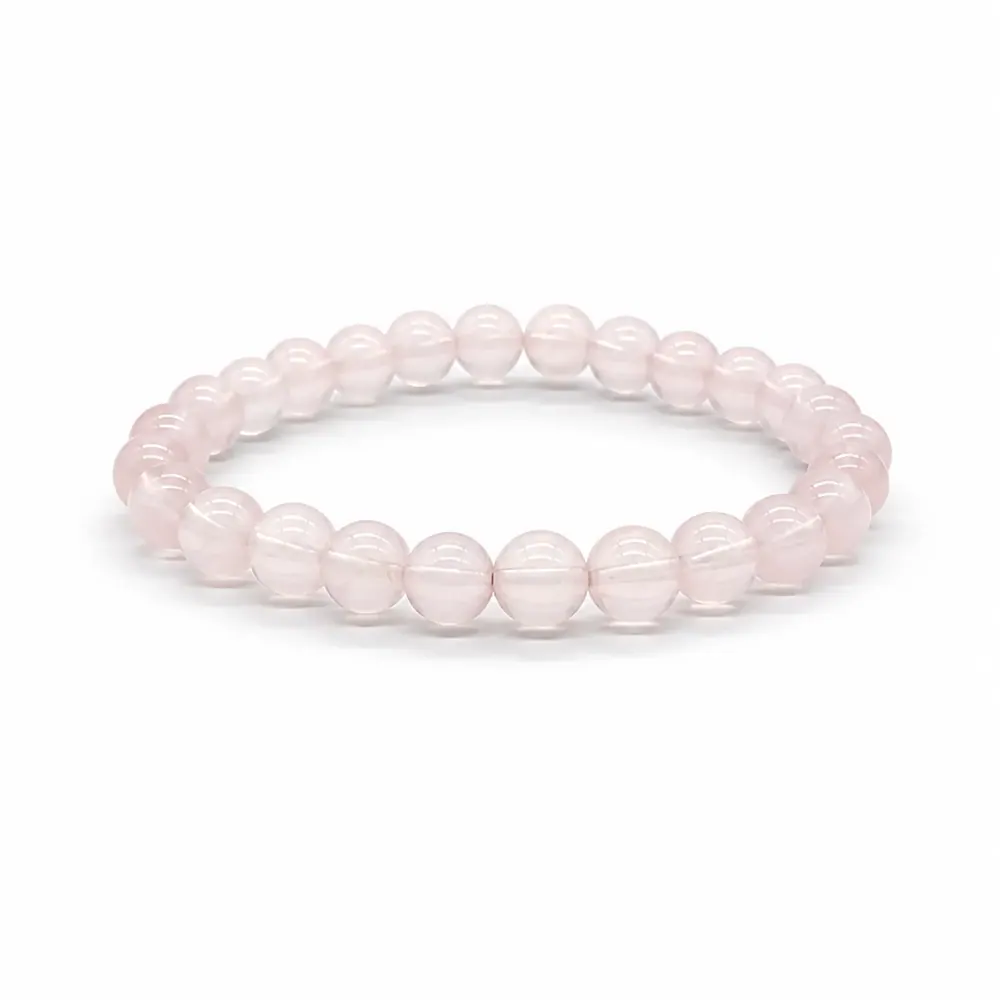
Rose quartz is one of the best-loved stones to wear, and one of the most varied. Here is what it is, how to tell a fine piece from an ordinary one, and why the star variety is worth knowing about.
At a Glance
- Mineral family
- Quartz
- Hardness
- 7 Mohs
- Optical effect
- Asterism (star variety)
- Colour range
- Pale blush, deep pink, cool lavender
- Origins we carry
- Madagascar, Mozambique
What It Is
Rose quartz is a pink variety of quartz, the same hard, durable mineral as clear quartz. Its colour comes from microscopic mineral fibres within the stone rather than any dye, which is why the best pieces look softly lit from inside rather than painted.
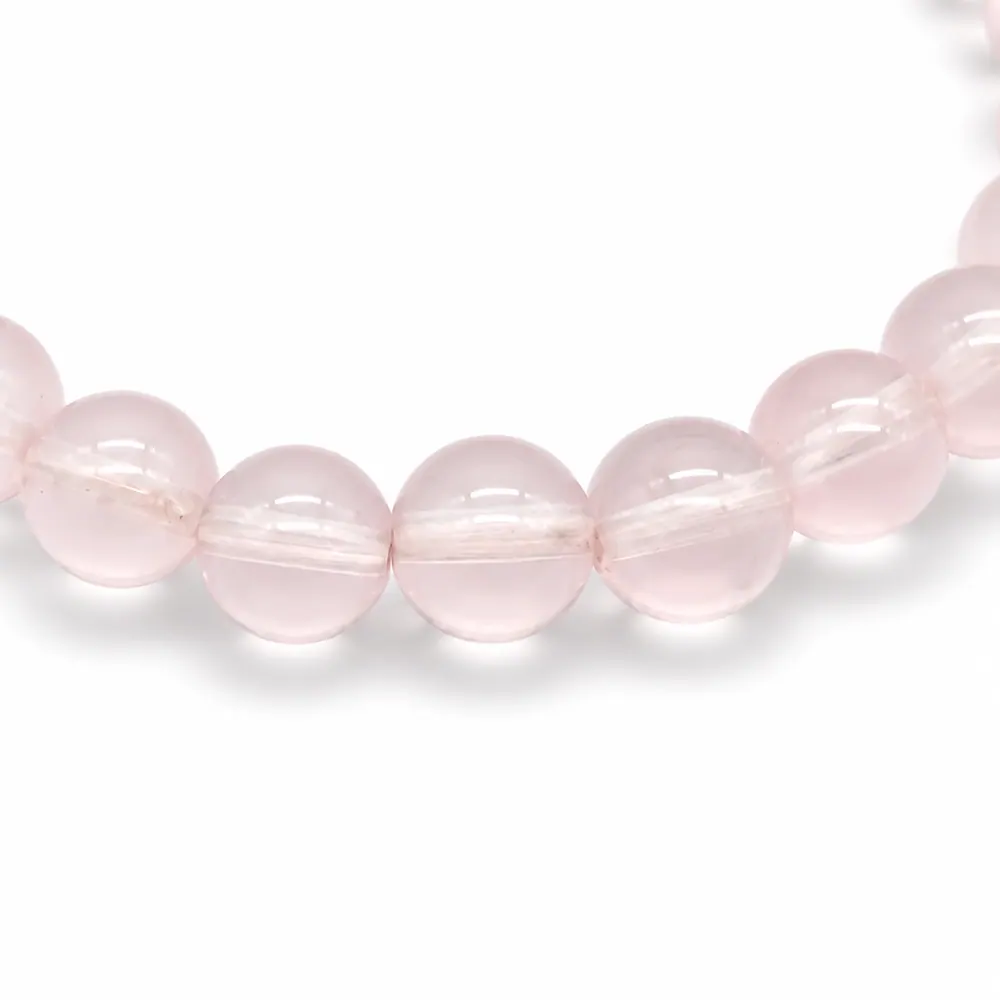
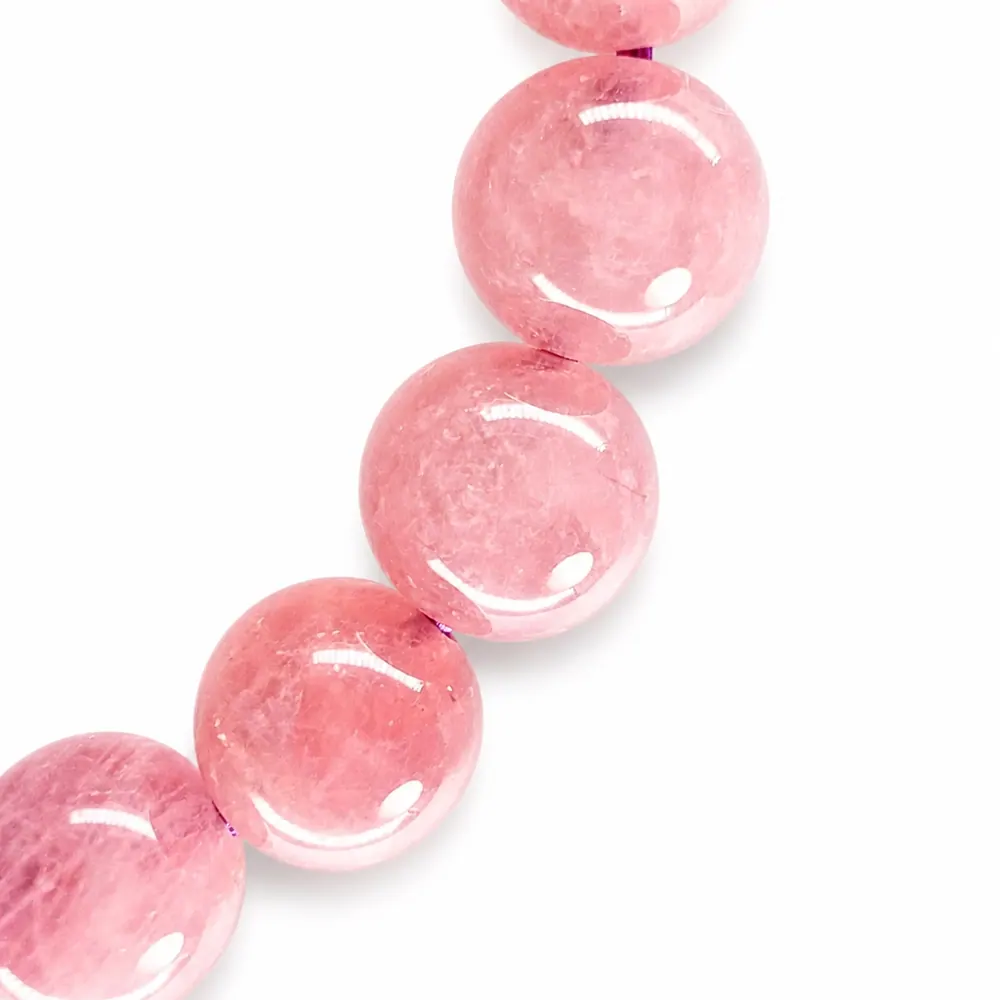
Tone and clarity vary widely by source. Mozambique material tends towards a deeper, warmer pink; Madagascar is known for a softer blush and for exceptionally clear, glassy beads sometimes called ice rose quartz.
Star Rose Quartz
A rare few stones contain fine needles of rutile aligned in three directions inside the quartz. When light catches them, they produce asterism — a soft six-rayed star that drifts across the bead as you move. Three sets of needles crossing at roughly 60° read as six rays: the same principle as star sapphire, in a gentler stone.
The finest Star Rose Quartz comes from Madagascar, where the body colour leans cooler — a mauve-violet that reads almost lavender in some light, and gives the star greater contrast.
How to Recognise Quality
Colour
Look for an even tone across the strand, without beads that are noticeably paler or greyer than their neighbours. Deeper colour is not always better — what matters is that it is clear and consistent.
Clarity
Rose quartz runs from milky to glass-clear. Neither is wrong, but within a strand the beads should share the same character, and the polish should let light travel into the stone.
The star
For star rose quartz, test in direct light. A good asterism shows all six rays meeting at a centre point, and every bead in the bracelet should carry one — not just two or three.
Surface and finish
Smooth, high polish, no chips or flat spots, clean drill holes and a well-tensioned cord. A matte surface diffuses the light and dulls both colour and star.
In the Crystal Tradition
Rose quartz has long been known as a stone of the heart, associated with warmth turned both outward and inward:
- Gentle self-compassion — turning a softer gaze towards oneself.
- Open-hearted warmth — a traditional gift between friends, partners and family.
- Emotional steadiness — many wearers describe a sense of calm during periods of stress or change.
- Inner clarity — in the star variety, the light that seems to come from within is often read as finding one's own direction.
Wearing & Pairing
Rose quartz wears beautifully on its own. Its soft colour suits silver, rose gold and almost every skin tone, and it rarely competes with anything else you are wearing.
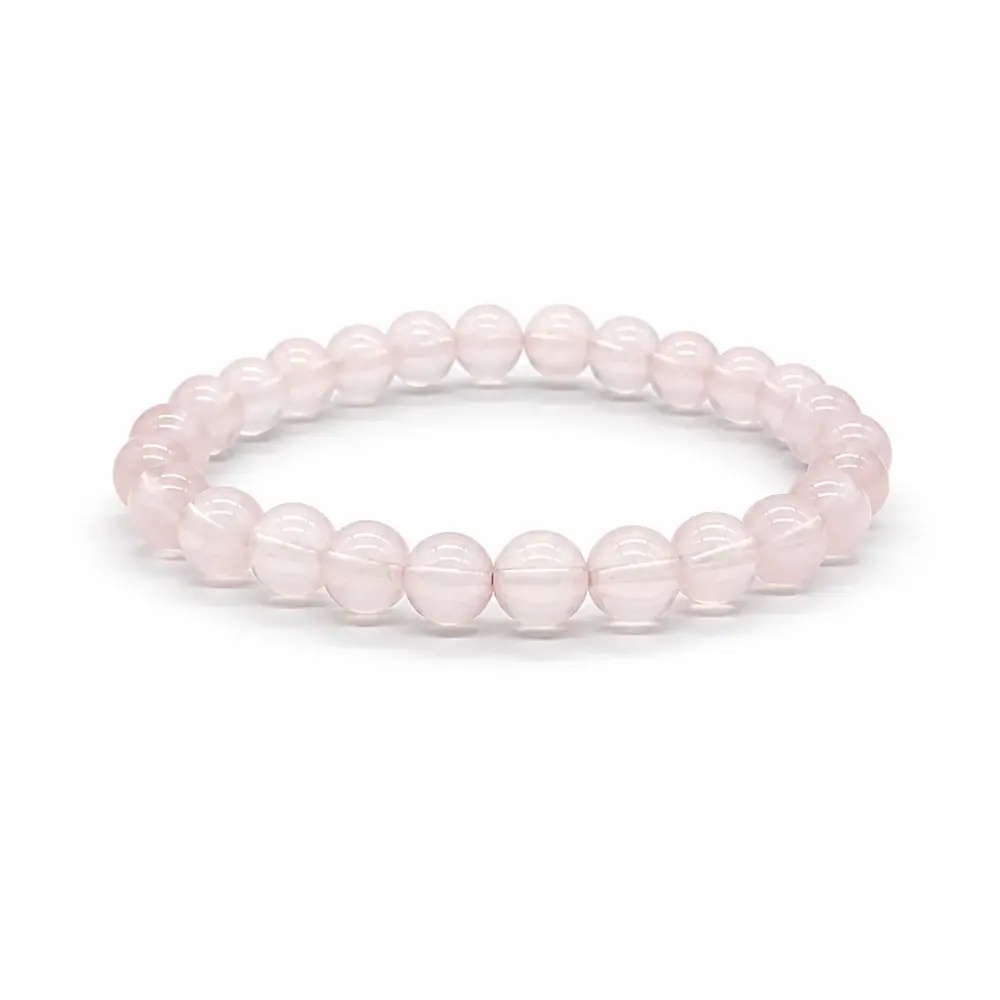
To stack, pair it with clear quartz for brightness, moonstone for a soft glow, or labradorite for a cooler palette. Star rose quartz shows its star best in daylight or under a single lamp — move your wrist slowly and watch it drift.
Care
At 7 on the Mohs scale, rose quartz is durable, but its colour is sensitive to light.
- Keep it out of prolonged direct sunlight — rose quartz can gradually pale.
- Take it off for washing, swimming and exercise.
- Perfume and lotion first — bracelet last.
- Store flat in a soft pouch; wipe with a soft, dry cloth.
There is nothing showy about rose quartz — until the light arrives, and sometimes there is a star, moving with you.
Our rose quartz pieces — Madagascar, Mozambique and star rose quartz — live in our shop.
See our rose quartz pieces