Moonstone
A soft light that moves beneath the surface — quiet, cool and never quite the same twice.
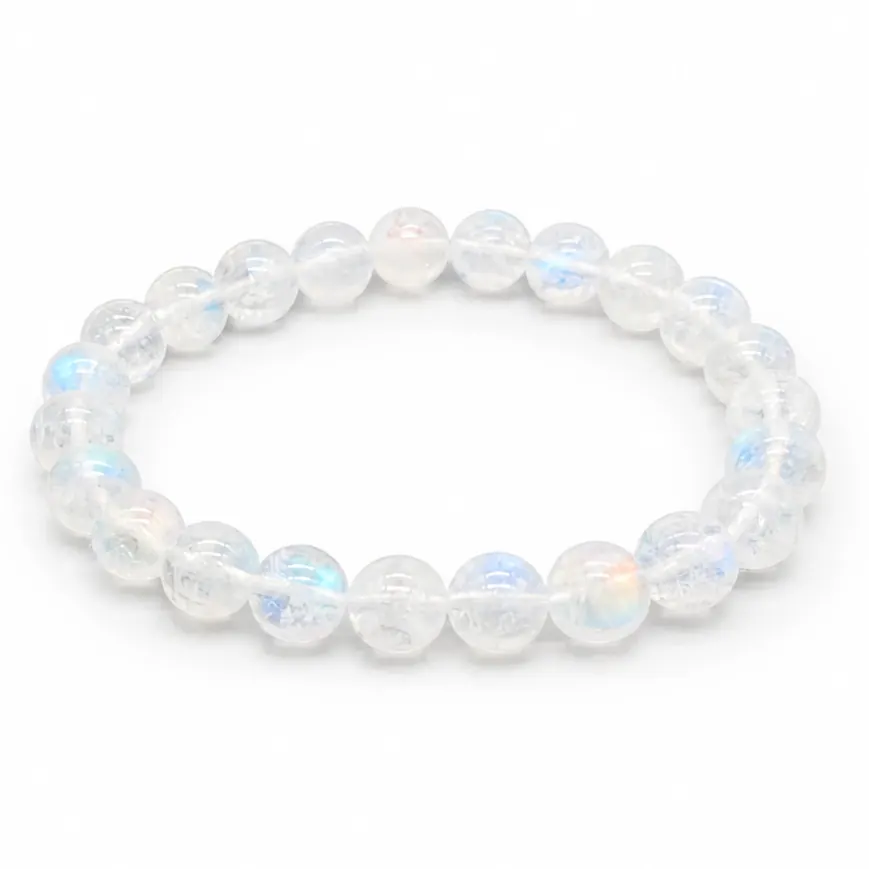
Named for the glow that drifts across it, moonstone has been worn for centuries and remains one of the most quietly compelling stones to wear every day. Here is what it is, how to judge it, and how to look after it.
At a Glance
- Mineral family
- Feldspar
- Hardness
- 6–6.5 Mohs
- Optical effect
- Adularescence
- Colour range
- Milky white, peach, grey, blue-flash
- Origins we carry
- Madagascar, India, Sri Lanka
What It Is
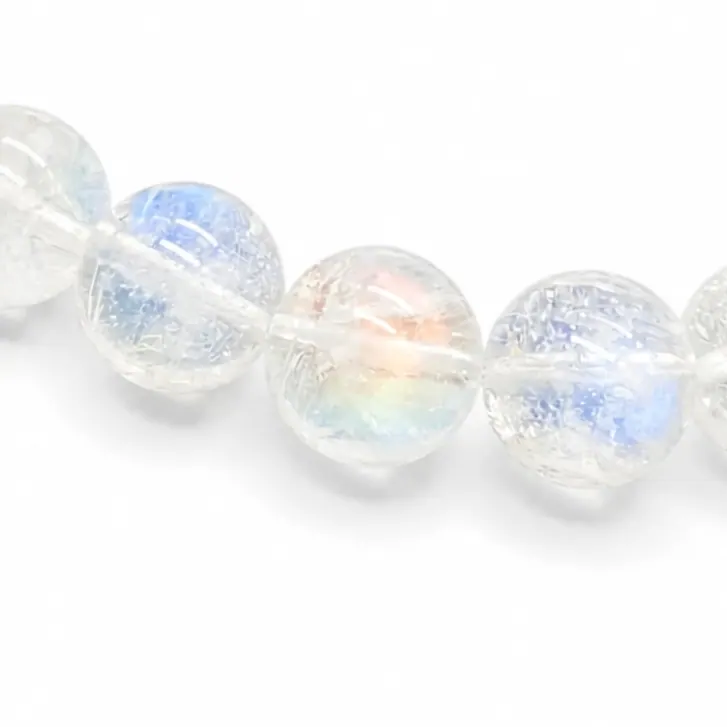
Moonstone is a feldspar mineral, prized for an optical effect called adularescence — the floating, luminous sheen that seems to glide just beneath the surface as the stone moves in the light.
The glow is structural, not a coating. As the crystal formed, it separated into extremely thin alternating layers, and light scattering between them gives moonstone its lit-from-within quality.
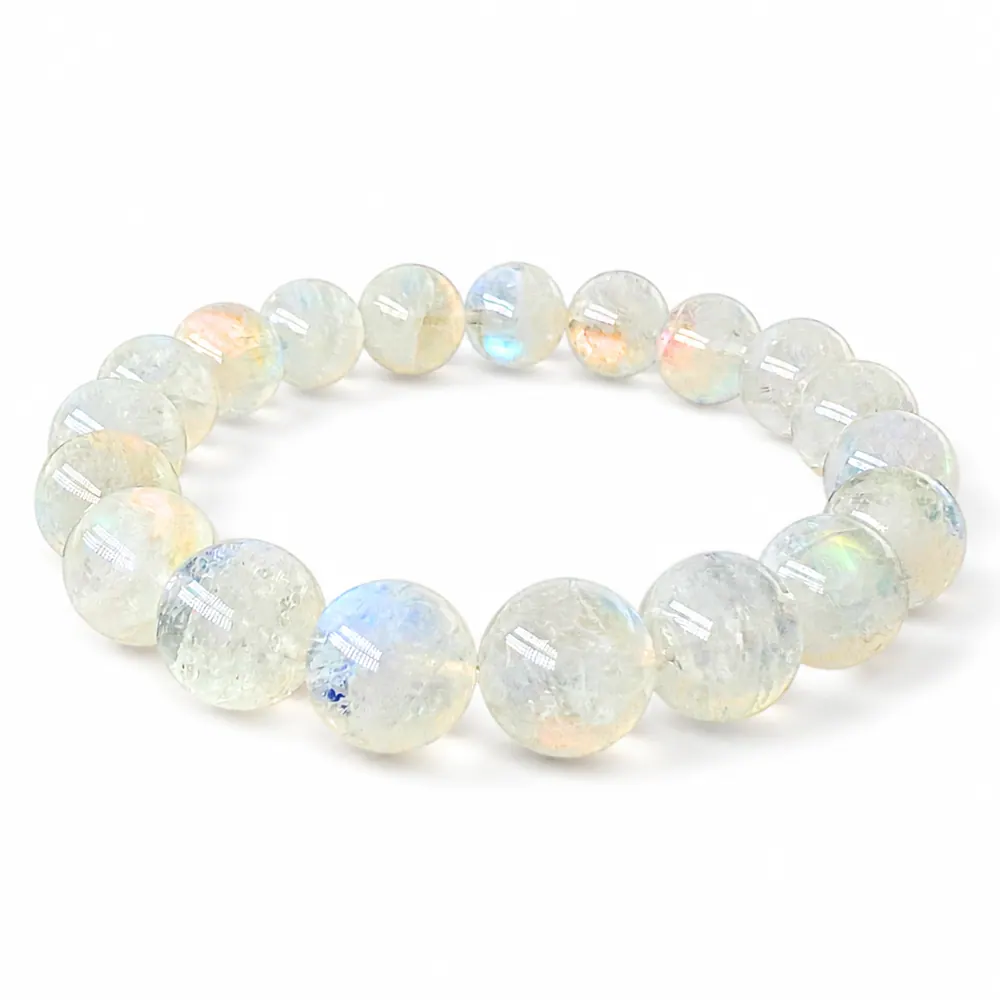
Colours range from milky white and peach to grey. The blue-flashing stone sold as rainbow moonstone is, strictly speaking, a white labradorite — a close feldspar relative with the same moving light.
How to Recognise Quality
The glow
Tilt the bracelet under a single light. Look for sheen that floats and moves across the bead, not a fixed surface shine. Strong blue adularescence is the most prized; milky and peach stones carry a softer charm of their own.
Translucency
Better moonstone lets light pass partly through. Chalky, fully opaque beads lack the depth that makes the stone.
Balance across the strand
Natural variation is expected and welcome, but the beads should feel even in size, tone and glow. One strikingly off-tone bead breaks the harmony.
Stringing and finish
Durable elastic, clean spacing, no fraying or slack, and spacers that sit securely.
In the Crystal Tradition
Moonstone is associated with gentle, inward-facing qualities:
- Intuition — tuning in to your own quiet judgement, especially when things feel uncertain.
- Emotional balance — turned to for its soft, cooling character during busy or unsettled periods.
- Natural rhythms — long linked to the lunar cycle, and to the ebb and flow of mood and creativity.
- New beginnings — often worn through transitions and fresh starts.
Many wearers simply find it a calm, familiar presence on the wrist.
Wearing & Pairing
Moonstone catches the light as you move, so a bracelet shows it at its best. By convention it is worn on the left wrist, though either is perfectly fine.
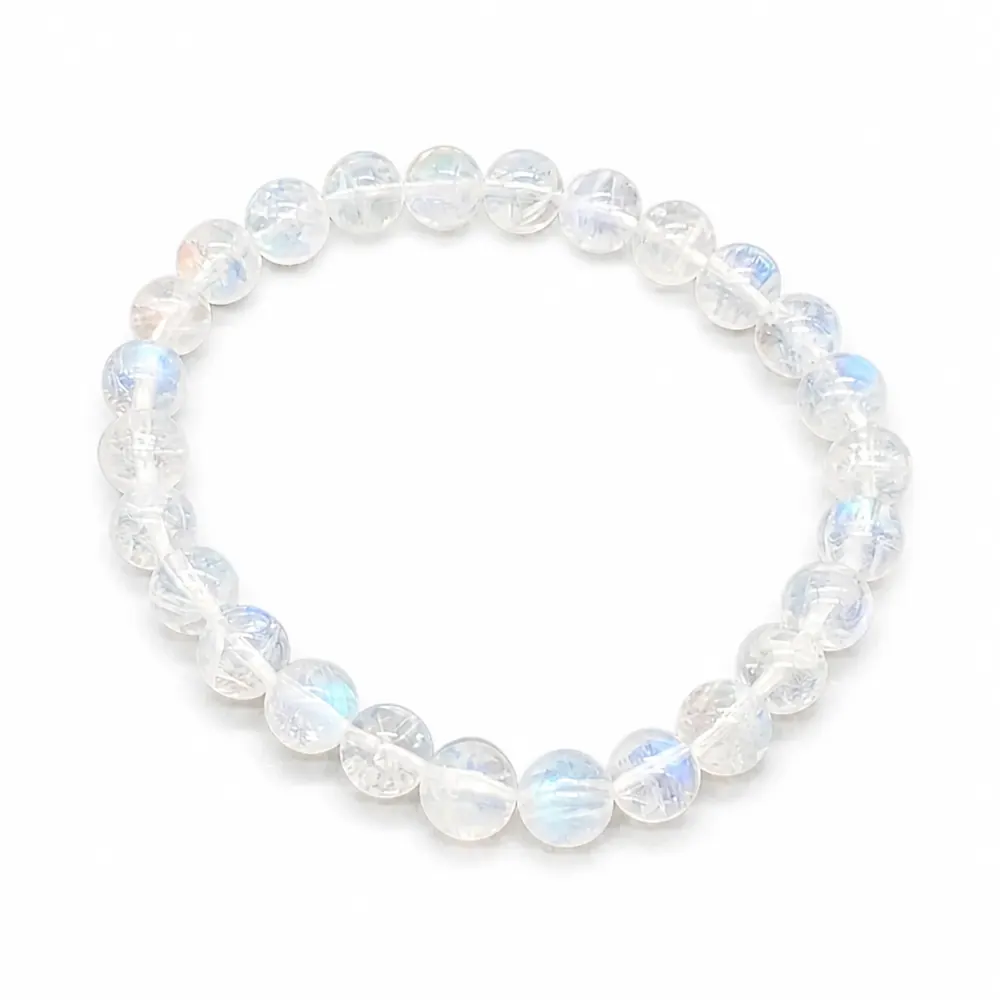
It sits beautifully against silver and white gold. To stack, pair it with rose quartz for warmth, or labradorite for a cooler, deeper flash — or wear it alone and let the stone speak.
Care
At 6–6.5 on the Mohs scale, moonstone is softer than quartz and more delicate than it looks.
- Take it off before showering, swimming or exercise.
- Perfume, lotion and hairspray first — bracelet last.
- Store it in a soft pouch, away from harder stones.
- Wipe with a soft, dry cloth after wearing.
A moonstone bracelet is not a loud piece. Worn daily, it becomes something familiar — a small reminder of softness, and of your own quiet rhythm.
Our moonstone bracelets — Madagascar, Indian and Ceylon — live in our shop.
See our moonstone pieces