How to Choose Your First Crystal Bracelet: A Beginner's Guide

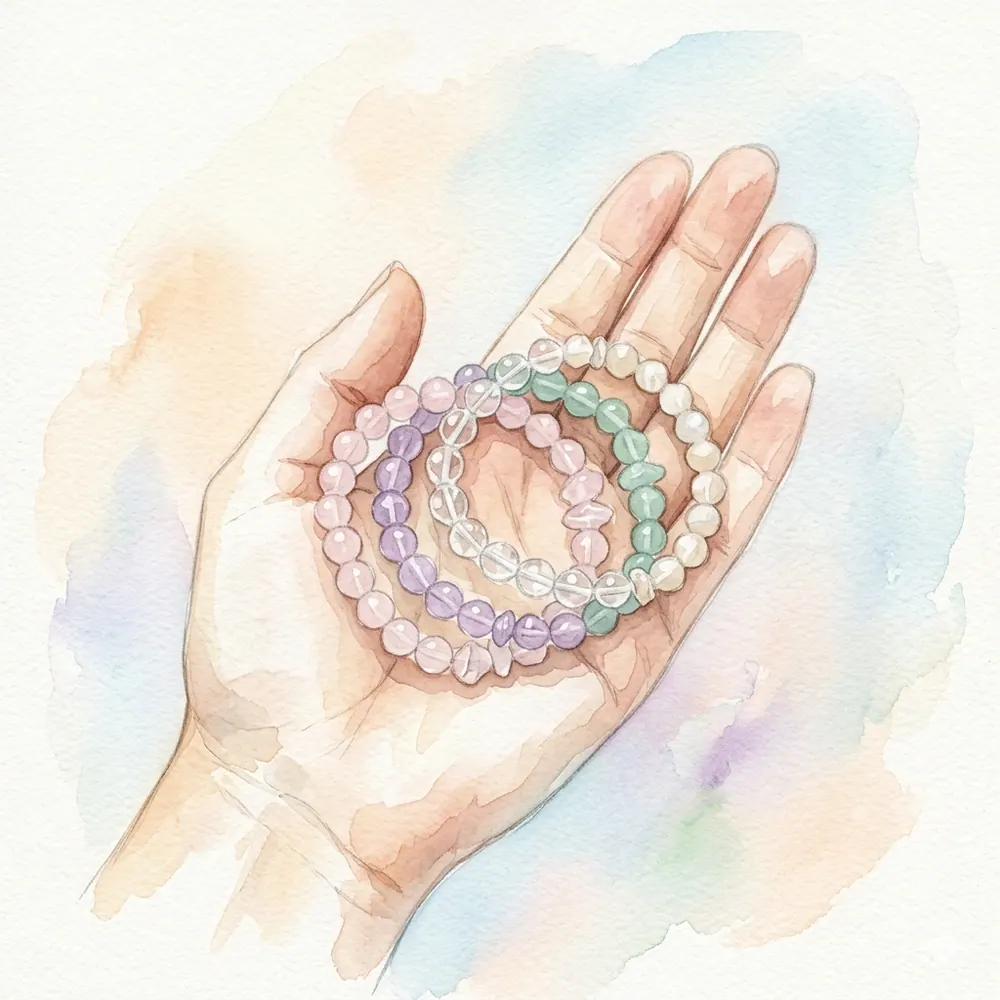
Watercolour illustration of an open feminine hand holding a small collection of crystal bracelets in soft pink, lavender, clear, green and white tones

Standing in front of a tray of crystal bracelets for the first time can feel quietly overwhelming. So many colours, so many meanings, so many stones with names you may not recognise yet. The good news is that choosing your first crystal bracelet doesn't require expertise — only a little guidance, and permission to trust what you feel. This guide walks you through three approaches to choosing, what to look for in a quality piece, and five stones that are especially kind to beginners.

Three Ways to Choose

There's no single right method. Most people use some combination of the three below.

1. By Intuition

Lay several bracelets in front of you. Let your eyes wander without trying to evaluate. Often, one will simply call — a colour that catches you, a piece you keep returning to. In the crystal tradition, this is considered the stone choosing you. Whether you treat that literally or symbolically, it's a remarkably effective filter.

2. By Intention

Start with a question: What am I hoping to invite in? More calm, deeper sleep, courage to start something new, gentler self-talk. Then match a crystal to that intention (the recommendations below are a good starting point). This approach suits people who like clarity and meaning.

3. By Attraction to Properties

If you enjoy research, you can start from the stone's traditional associations — protective, grounding, opening to love, sharpening focus — and choose from there. Many wearers refine this method over time, building a small collection that mirrors different needs.

What to Look For in a Quality Bracelet

Once you've narrowed in on a stone, a few practical checks help you choose a piece that will last:

  • Bead quality — look for consistent colour, smooth polish, and no visible cracks. Natural inclusions are normal and often beautiful; cracks are not.
  • Stringing — the elastic or thread should sit snug but not overstretched. If you can see large gaps between beads when relaxed, it's been overstretched and will fail sooner.
  • Honest sourcing — reputable sellers are transparent about whether a stone is natural, heat-treated, dyed, or synthetic. There's nothing wrong with treated stones if disclosed; opacity is the warning sign.
  • Finish on metal components — any spacers, charms, or clasps should be tarnish-resistant (sterling silver, gold-filled, or solid gold) for daily wear.

A good bracelet doesn't have to be expensive. It does have to be honestly represented.

Sizing: Getting the Fit Right

Measure your wrist with a soft measuring tape (or wrap a strip of paper around and measure against a ruler). Add about 1.5 to 2 cm for a comfortable elastic bracelet — snug enough to stay in place, loose enough to roll over your hand without pulling.

Standard sizes are roughly:

  • Small: 14–15.5 cm wrist
  • Medium: 15.5–17 cm wrist
  • Large: 17–18.5 cm wrist

When in doubt, size up. A bracelet that fits well lasts far longer than one that's constantly stretched.

Which Wrist? Left or Right?

In many crystal traditions, the left wrist is the receiving side — wear stones here for energies you want to draw in (calm, love, abundance). The right wrist is the giving side — wear stones here for energies you want to project outward (confidence, protection, communication).

This is tradition, not rule. Wear yours where it feels right.

Five Crystals That Are Kind to Beginners

These five are gentle, versatile, and forgiving — excellent first stones.

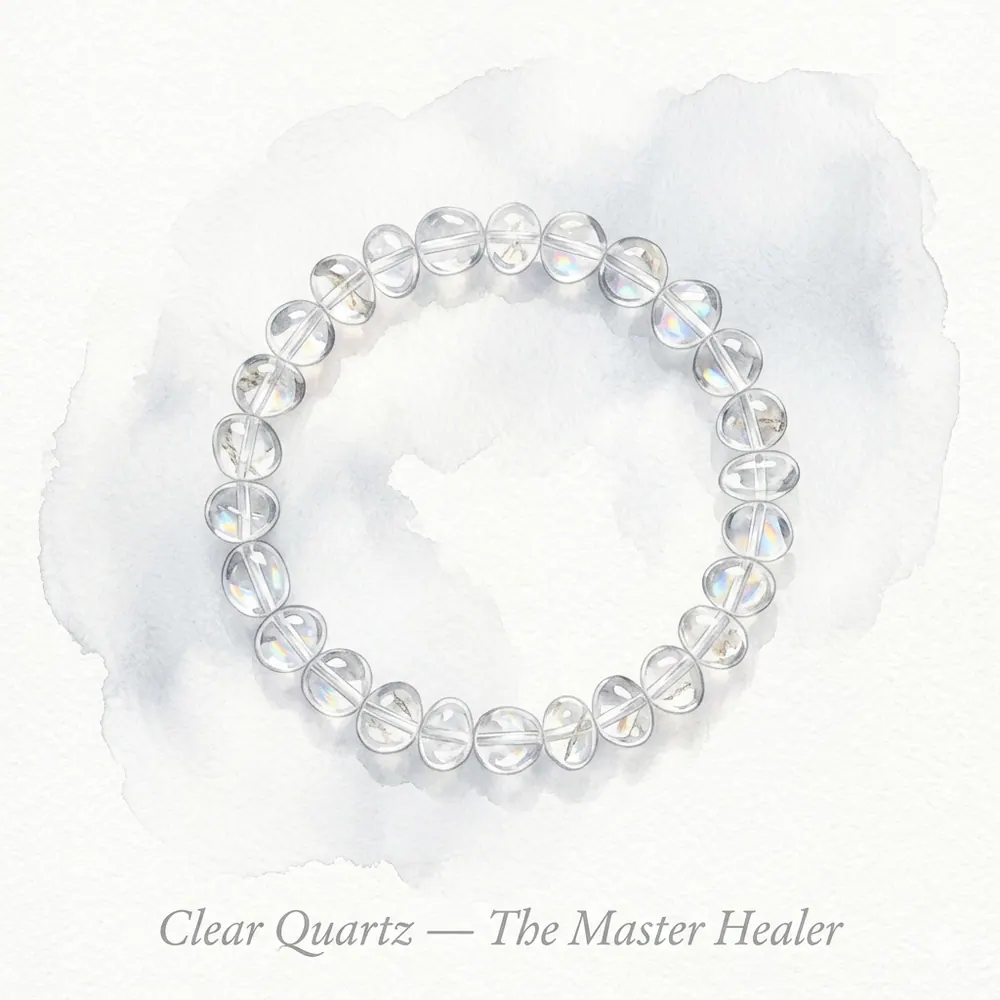
1. Clear Quartz — The Master Healer

Watercolour illustration of a single delicate clear quartz crystal bracelet catching light with subtle rainbow prismatic reflections

Often called the most versatile crystal of all. Clear quartz is associated with clarity, amplification, and balance, and is said to work harmoniously with any other stone. A wonderful all-purpose first bracelet.

2. Rose Quartz — The Stone of Gentle Love

Watercolour illustration of a single delicate rose quartz crystal bracelet with soft pastel pink beads on a blush background

Soft pink and deeply soothing, rose quartz is the classic stone of self-love, compassion, and emotional healing. Especially loved by those navigating change, grief, or simply wanting to be softer with themselves.

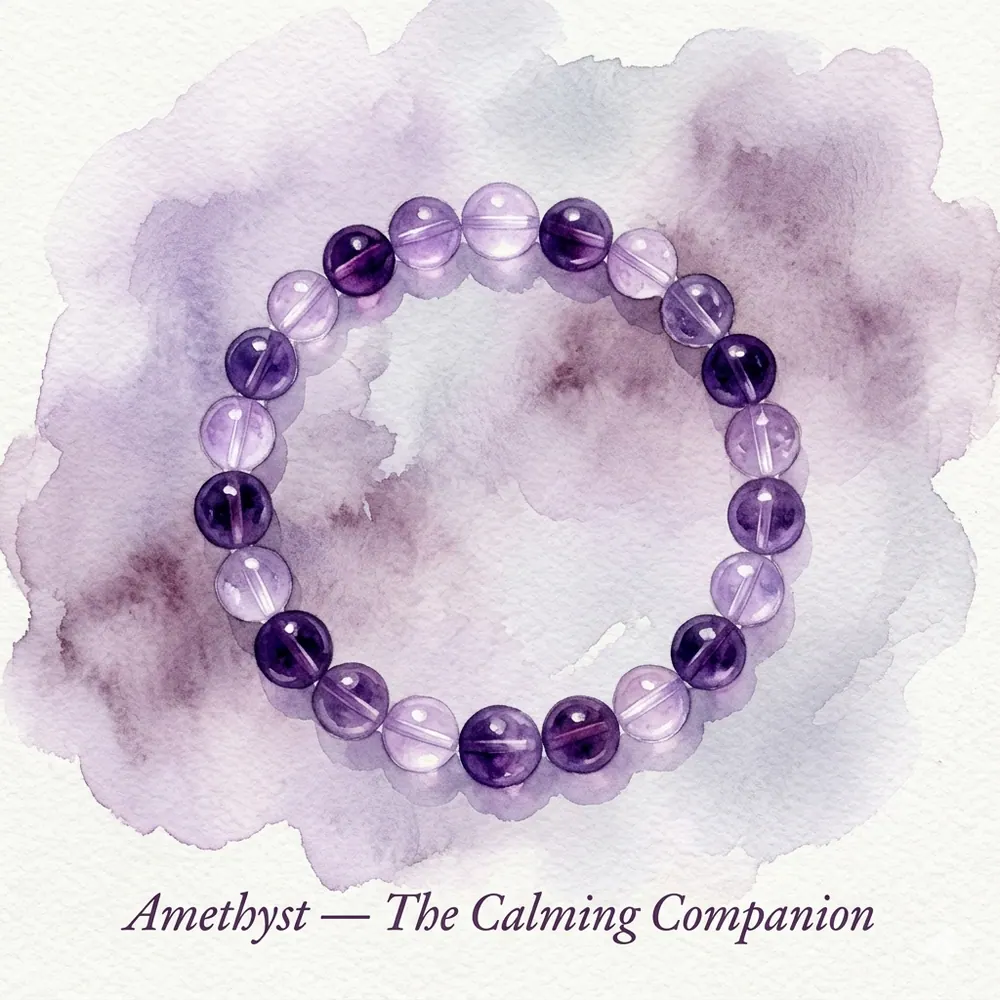
3. Amethyst — The Calming Companion

Watercolour illustration of a single delicate amethyst crystal bracelet with rich purple and lavender beads

Lavender to deep purple, amethyst is traditionally linked to calm, restful sleep, and intuition. A natural choice if your goal is to slow down, sleep better, or quiet a busy mind.

4. Black Tourmaline — The Protector

Watercolour illustration of a single delicate black tourmaline crystal bracelet with deep matte black beads catching subtle silver highlights

A grounding, protective stone often worn for a sense of stability and energetic shielding in crowded or draining environments. Discreet, dark, and easy to pair with any outfit — a favourite for daily wear.

5. Madagascar Moonstone — The Stone of New Beginnings

Watercolour illustration of a single delicate Madagascar moonstone crystal bracelet with milky white beads showing silvery-blue adularescence

Soft white with a gentle silvery-blue shimmer, Madagascar moonstone is traditionally associated with new beginnings, feminine energy, and emotional balance. Believed to soothe the heart through transitions and quiet inner turbulence, it's a beautiful choice for anyone starting a new chapter — a move, a relationship, a season of personal growth.

A Gentle First Step

Your first crystal bracelet doesn't need to be your forever bracelet. Many wearers find their tastes shift over months and years as they get to know themselves and their stones better. The piece you choose today is simply the beginning of a relationship — one that grows with you.

Once you've chosen, two small habits will keep your bracelet beautiful and energetically clear: gentle daily care, and occasional cleansing. Both are simpler than they sound, and we've written companion guides on each.

If you'd like help choosing between two pieces, or have questions about a specific stone, please reach out — we're always happy to talk crystals.

Back to blog